Methodological innovation
Co-registering EEG and eye-tracking
I combine millisecond-level electrophysiology with gaze dynamics to capture, in real time, how the bilingual mind remembers, plans and imagines the future.
Marie Skłodowska-Curie Global Postdoctoral Fellow
Cognitive Neuroscience of Language & Memory
University of Granada (Spain) & Northwestern University (USA)
Exploring how the language we use shapes the way we think about the future — from remembering our intentions to imagining personal and collective futures — studied with the co-registration of EEG and eye-tracking.
Research overview
Much of our everyday cognition is oriented toward the future: we anticipate events, make plans, remember intentions and imagine what lies ahead. Yet in a world where more than half of the population speaks two or more languages, we still know little about how the language we use shapes the way we think about the future.
My research grew out of prospective memory — remembering to act on our intentions — where I showed that the language bilinguals are operating in changes how they monitor for and retrieve future intentions. Building on this foundation, I am now extending my work to future-oriented cognition more broadly: do bilinguals imagine their personal and collective futures differently in their first and second language, or when the linguistic context is incongruent? To answer these questions I combine behavioural paradigms with the co-registration of EEG and eye-tracking, an approach still scarce in bilingualism research.

Whether bilinguals imagine, plan and remember the future differently in their first or second language, or when the linguistic context is incongruent — from personal future thinking to collective futures.
My core line to date: how using one or more languages, and everyday practices such as language switching, shape the monitoring and retrieval of future intentions.
Combining millisecond-level electrophysiology with gaze dynamics to capture the real-time mechanisms of future-oriented cognition in the bilingual mind.
Methodological innovation
I combine millisecond-level electrophysiology with gaze dynamics to capture, in real time, how the bilingual mind remembers, plans and imagines the future.
Selected work
Where I work
From the very start of my career I have embraced international research, building a network of collaborators across leading institutions around the world.
Hover over or tap a point for details.
I develop my research across two leading groups, bridging Spain and the United States.

Prof. Mª Teresa Bajo · CIMCYC, University of Granada (Spain)
My home group in Spain, within the Mind, Brain and Behavior Research Center (CIMCYC). The return phase of my MSCA fellowship will establish the first EEG + eye-tracking co-registration lab in Spain dedicated to bilingualism.
Visit lab →
Prof. Viorica Marian · Northwestern University (USA)
My host lab during the outgoing phase of the MSCA Global Fellowship (2024–2026), a world-leading group in psycholinguistics where I am expanding my theoretical and methodological expertise.
Visit lab →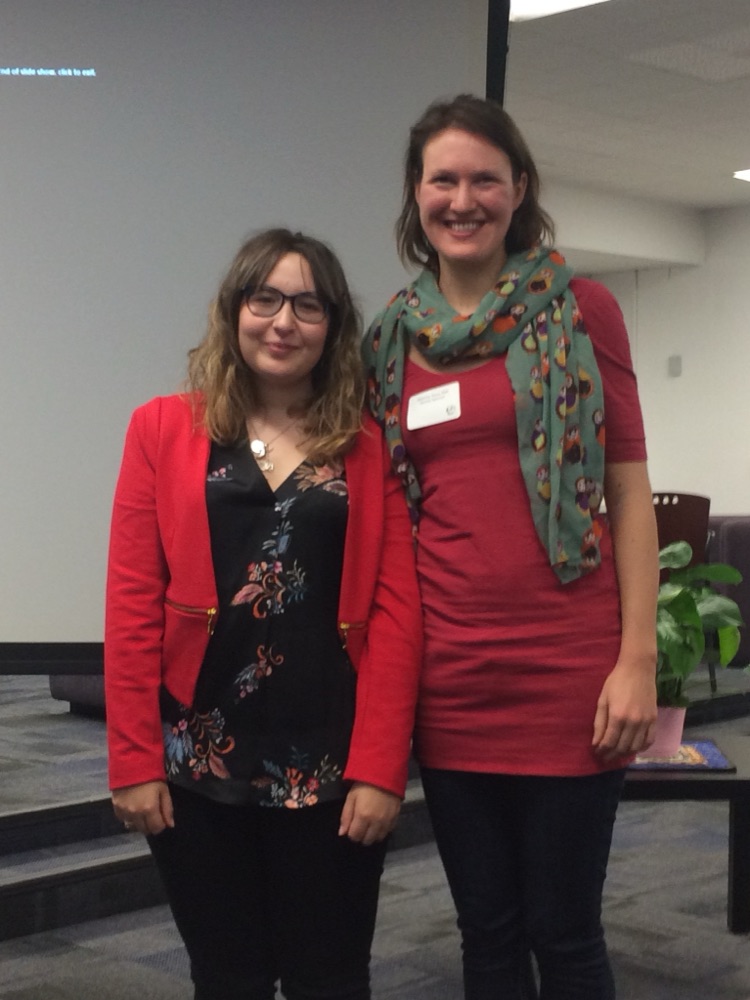
Host: Prof. Eleonora Rossi
Host: Prof. Eleonora Rossi · collaboration on the HeLPiNG project (Prof. Jason Rothman, UiT, The Arctic University of Norway)
Funded research
European Commission · Horizon Europe (Marie Skłodowska-Curie Postdoctoral Fellowships — Global) · €285,145 · 2024–2027 · MSCA Global Fellowship · 101150333
My flagship project, consolidating my independent line: how different bilingual experiences modulate the processes behind remembering to act in the future, using the co-registration of EEG and eye-tracking.
…and 10 further funded research and outreach projects. See all →
Funding, recognition & service
Academic lineage
My scientific roots trace back to pioneers of the cognitive revolution, such as Ulric Neisser and Jerome Bruner, through my mentors in Spain and the United States.
Mentoring & teaching

Supporting the next generation of researchers is central to how I work. I mentor and supervise undergraduate and graduate students across institutions in Spain and the United States, including students on international exchange programmes and through the APS Mentorship Program, and I teach at undergraduate level. My aim is to offer hands-on training in open, reproducible psycholinguistics and to help early-career researchers find their own questions.
Outreach
From the European Researchers' Night to Bilingualism Matters, I work to make research on multilingualism accessible to schools, families and the public.